Show Me Tell Me Questions
At the start of your driving test, the examiner will ask you a ‘Tell Me’ ques;on when you reach the vehicle. This will be asked before the driving element of the driving test begins. During the driving element of the test, the examiner will ask you to demonstrate you can operate one of the ancillary controls listed below. This is known as the ‘Show Me’ ques;on. By the ;me of your driving test, you should be familiar with the loca;on and use of the relevant controls. You should be fully aware of the method of using each control component on the vehicle you could be using on the day of your driving test.
DVSA Safety Check: Show Me Questions
Please note:
The ‘show me’ questions start by the examiner saying, “When it’s safe to do so…”.
It is important you choose an appropriate ;me to carry out the request. E.g. It would
not be deemed ‘safe to do so’ if you operate the dipped headlights when another road
user is in the immediate vicinity. This could mislead the other road user into thinking
you are flashing your headlights at them. It would be safer to turn them on and leave
them on a liMle longer to avoid confusion.
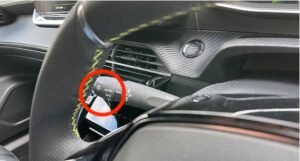
Twist the end of the lever all the way towards the front of the car.
Then twist all the way back if you don’t want to keep the wiper going.
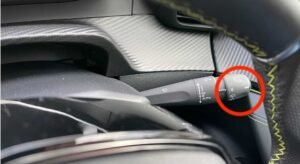
Pull the lever towards the steering wheel and hold while the screen wash is sprayed onto the windscreen.
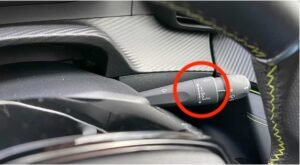
Twist the end of the lever all the way until you see the dipped headlight warning light illuminate on the dashboard
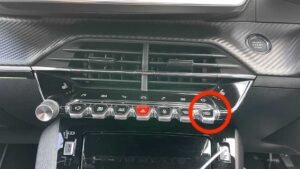
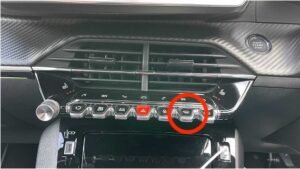
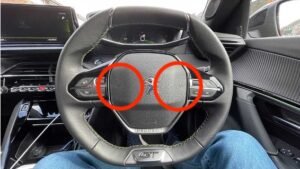
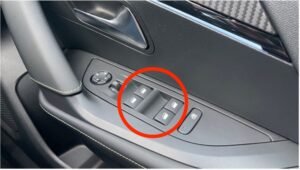
DVSA Safety Check: Tell Me Questions
The brakes should not feel spongy or slack. You should test them as you set o8 and the vehicle should not pull to one side.
In the manufacturers guide/user manual.
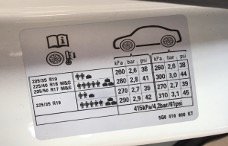
Use a reliable pressure gauge. Check and adjust the pressures when the tyres are cold. Don’t forget the spare tyre and remember to refit the valve caps.
The head restraint should be adjusted so the rigid part is at least as high as your eyes or the tops of your ears, and as close to the back of the head as is comfortable.
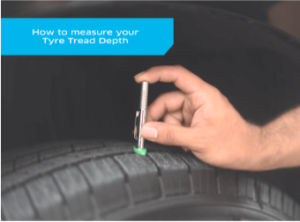
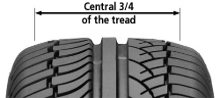
There should be no cuts or bulges. A minimum of 1.6 millimetres of tread depth across the centre of the tyre and all the way around.
Operate the switch to turn them on and walk around the vehicle and check the lights are working.


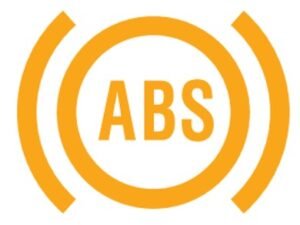
A warning light should illuminate on the dashboard if there is a fault with the anti-lock braking system.
Switch on the hazards lights and walk around the vehicle to check all of the indicator lights are flashing.
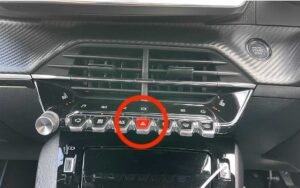
Press the brake pedal and make use of reflec;ons in windows, doors or ask someone to check for you.
If the steering becomes heavy, the system may not be working properly.
Before starting a journey, 2 simple checks can be made.
- Turning the steering wheel just after moving off will give immediate indication that the power steering is working.
- With the engine off, turn the steering wheel a little and hold, while you switch on the engine should result in a noticeable movement of the steering wheel as it begins to operate.
Switch on the headlights, then the fog lights. There should be a warning light on the dashboard. Use the fog lights when visibility is reduced to 100 metres ahead.

Switch on the headlights, then the fog lights. There should be a warning light on the dashboard. Use the fog lights when visibility is reduced to 100 metres ahead.

Switch on the dipped headlights then move the lever to main beam. Check that the blue light is illuminated on the dashboard.

You check the level of coolant is between the maximum and minimum markers on the side of the tank.
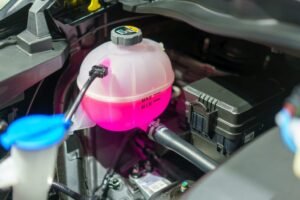
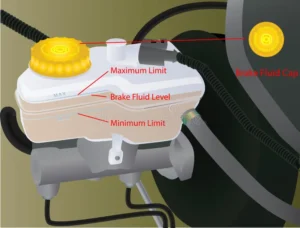
Point out the brake fluid tank. You check the level is between the maximum and minimum markers on the side of the tank.